

At a glance
- Hopper flow problems are primarily driven by surface friction, material adhesion and internal wear rather than hopper design limitations.
- Improving internal surface conditions can increase discharge efficiency and extend hopper service life without requiring a structural redesign.
- UHMWPE liners provide a low-friction, nonstick surface that supports consistent discharge, reduces intervention and extends hopper service life.
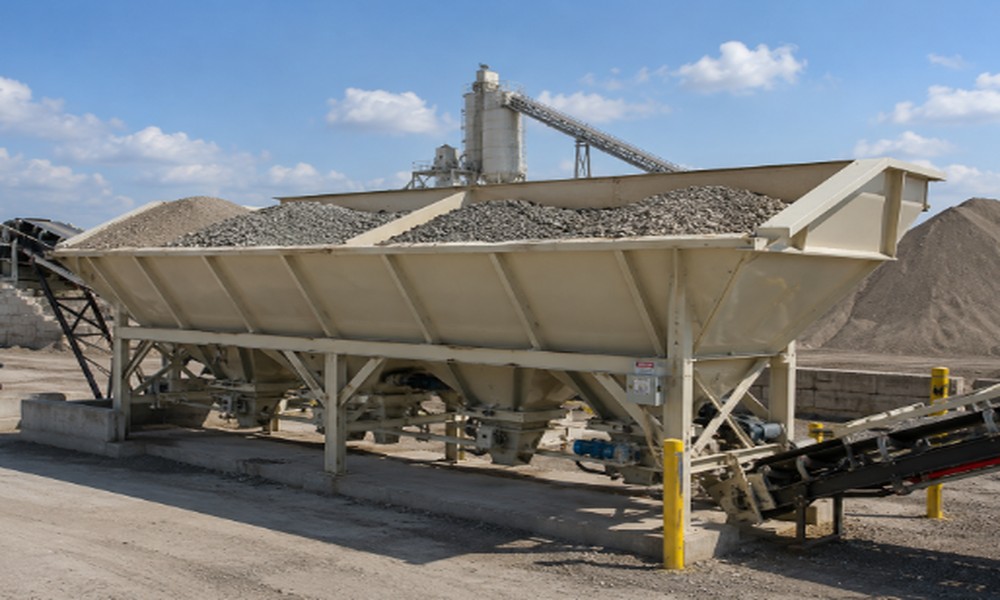
Flow problems in hoppers occur when bulk material does not discharge smoothly or consistently under gravity. This typically happens when material sticks to internal walls, bridges at the outlet or ratholes through the centre of the hopper. As these blockages form and collapse, material is released unevenly, resulting in surging or inconsistent discharge that disrupts downstream processes and reduces overall throughput.
These issues arise from how material interacts with sloped walls, internal surfaces and high-pressure discharge zones. In many cases, friction, adhesion or compaction prevents material from sliding as intended, even when the hopper itself is structurally sound and correctly sized for the application.
This article presents practical measures that improve material movement and discharge reliability without requiring major structural redesign, including low-friction liner solutions such as UHMWPE liners.
Reduce Wall Friction Inside the Hopper
Hoppers rely on gravity to discharge material, but gravity can only work when material can slide freely along the hopper’s internal walls. Over time, steel surfaces become rougher due to abrasion, corrosion and repeated material impact, increasing resistance at the wall-material interface.
As this resistance increases, materials are less likely to slide smoothly toward the outlet. This reduces the active flow area within the hopper, leading to ratholing and unstable discharge patterns and ultimately intermittent discharge rather than steady flow.
Reducing wall friction is an effective corrective approach. By improving the hopper’s internal surface conditions, material slides more freely under gravity rather than requiring mechanical assistance or operator intervention.
Reducing friction at the wall-material interface restores predictable flow and allows the hopper to discharge as intended, without changing the operating procedures.
Prevent Material Build-Up and Adhesion
Hoppers discharge material efficiently when new, but performance degrades as material build-up develops over time. Fine particles, surface moisture and cohesive material cause them to stick to hopper walls rather than discharge cleanly. With repeated operation, these deposits accumulate along internal surfaces and progressively disrupt flow.
As build-up develops, the internal flow path narrows, restricting movement and reducing hopper capacity. When available flow space is reduced, even minor variations in loading or material condition can disrupt discharge. Left unchecked, adhesion inside the hopper body progressively undermines stable, predictable discharge.
Maintaining consistent, low-adhesion internal surfaces helps prevent these problems from developing, often achieved through UHMWPE liners. When hopper walls resist sticking, material is less likely to accumulate, and flow paths remain open and uniform.
By minimising surface adhesion, operators can preserve hopper capacity, maintain steady discharge and reduce the need for frequent cleanouts or manual intervention.
Stabilise Discharge at the Hopper Outlet
The hopper outlet operates under the highest pressure and compaction. Bulk material enters the hopper through a wide opening and converges toward a smaller outlet, concentrating vertical load at the outlet. This increases contact forces against the outlet surfaces, making discharge sensitive to surface resistance.
In this zone, even small increases in friction can disrupt flow. Material can bridge across the opening or lead to stop-start or surging discharge. These release failures occur at the outlet, even when material above appears to be moving.
Improving surface conditions in high-stress outlet zones helps stabilise discharge at the point of release. By reducing resistance where pressure is greatest, material can release and exit more evenly, allowing continuous discharge under gravity without changing outlet dimensions or relying on mechanical agitation.
Extend Hopper Performance Without Structural Changes
Redesigning hopper angles, modifying outlet geometry or rebuilding internal structures is often time-consuming and resource-intensive. These changes typically require extended shutdowns, engineering approvals and significant capital investment, all while removing equipment from service and interrupting production.
In many cases, hopper flow problems are not caused by the underlying structure but by how material interacts with internal surfaces during operation. Addressing flow behaviour through internal flow-improvement measures allows existing hoppers to perform as intended without altering their shape or layout.
Flow problems in hoppers rarely stem from a single issue. In most cases, they result from excessive wall friction, material adhesion and surface degradation across internal hopper surfaces, particularly along sloped walls and in high-pressure discharge zones.
The corrective measures outlined above, such as reducing wall friction, preventing build-up, stabilising discharge and improving performance without structural changes, can be addressed through the installation of UHMWPE liners. These liners create a low-friction, non-stick surface that allows bulk material to move freely.
By protecting the internal surfaces where flow issues originate, UHMWPE liners support consistent discharge, reduce manual intervention and extend hopper service life without altering hopper geometry or disrupting operations.
If hopper flow reliability is affecting throughput or maintenance effort, explore UHMWPE liner solutions engineered to improve internal surface conditions. Solutions like OKUSLIDE® support smoother discharge, fewer cleanouts, and ensure predictable operation in demanding hopper applications.







Leave a Comment