
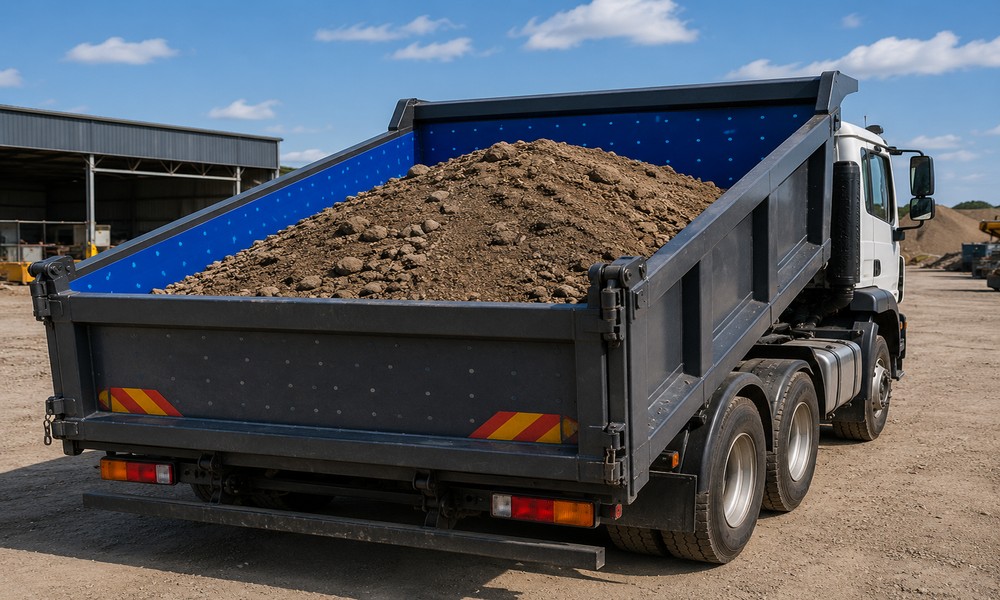

At a glance:
- UHMWPE bed liners improve material release, minimising cleaning delays and reducing downtime in fleet operations.
- Its lower surface friction reduces tipping angles and mechanical strain on hydraulic systems.
- UHMWPE liners protect the truck bed structure by absorbing abrasion and impact, reducing the need for repair and maintenance.
- Resistance to moisture and chemicals limits corrosion, preserving internal surfaces and maintaining long-term structural integrity.
- Together, these benefits help reduce downtime, improve fleet availability and support more consistent operational performance.
In operations that rely on frequent material movement, downtime directly translates to productivity loss, reduced haul capacity and increased operational pressure. Over time, these interruptions compound, leading to reduced revenue, higher labour coordination and growing workshop demand.
While you may focus on engines and hydraulic systems, the truck body also plays a critical role in downtime. Abrasion, carryback, impact loading and moisture exposure inside unprotected bodies gradually increase repair frequency and disrupt consistent discharge, taking vehicles out of active rotation more often than expected.
One of the most effective ways to reduce these issues is to improve the truck body’s internal surface with liners. Among the available options, Ultra-High Molecular Weight Polyethylene (UHMWPE) liners are widely used in industrial operations. They manage these internal stressors through:
- Improved load discharge and reduced carryback
- Protection against abrasion and surface degradation
- Lower tipping angles that reduce mechanical strain
- Impact resistance that protects against structural damage
- Chemical and moisture resistance for corrosion protection
Collectively, these performance characteristics directly reduce unplanned downtime across fleet operations. The following sections examine how each mechanism contributes to improved operational continuity.
Reduced Carryback Minimises Cleaning Delays
Carryback occurs when material fails to fully release during tipping and adheres to the truck body. Friction at the steel surface, compressive loading during transit and moisture within fine materials all contribute to residual buildup.
Residual build-up inside the truck often requires manual clearing before the next load, delaying turnaround. Even minor discharge inefficiencies compound across daily cycles and reduce overall fleet throughput.
Low-friction UHMWPE liner surfaces allow material to release more cleanly. With less residual buildup, turnaround becomes more predictable and cleaning-related interruptions are reduced.
Lower Tipping Angles Reduce Mechanical Stress
When materials do not slide freely during discharge, operators often compensate by increasing the tipping angle to achieve full release. This places additional strain on hydraulic systems, hoist cylinders, hinges and mounting structures.
Repeated high-angle tipping accelerates component wear and increases the likelihood of mechanical fatigue. In demanding haulage environments, this can translate into more frequent servicing and unplanned downtime.
By reducing surface friction inside the truck body, UHMWPE liners enable smoother discharge at lower tipping angles. This exerts lower mechanical stress compared to truck bodies without liners, preserving hydraulic components and structural fittings. This helps reduce maintenance interruptions and extend equipment reliability.
Abrasion Protection Prevents Structural Body Repairs
Unlined truck bodies are continuously exposed to abrasive loads such as aggregates, demolition waste, asphalt and grain. As these materials shift during transport and discharge, abrasive particles slide across the steel surface. Over time, this causes plate thinning, gouging and surface fatigue, particularly along high-impact zones and load concentration points.
Progressive wear increases the likelihood of cracking and structural repairs. Welding, patching and plate replacement take vehicles off-road, adding to workshop backlog and reducing available fleet capacity.
UHMWPE liner systems act as a sacrificial wear layer between the load and the steel body. By absorbing abrasion before it reaches structural components, liners reduce repair frequency and extend body service life, directly lowering maintenance-related downtime.
Impact Resistance Limits Damage from Aggressive Loads
Bulk haulage often involves aggressive loads such as rock, demolition material and oversized aggregates. During loading, concentrated point impacts transfer force directly into the truck body. Repeated shock loading can dent steel plates, distort structural panels and create stress concentrations that lead to cracking over time.
Even minor deformation can affect body alignment and compromise long-term structural integrity. Left unchecked, these issues require taking vehicles out of service for welding, reinforcement or panel replacement.
UHMWPE liners absorb and disperse impact energy before it reaches the steel substrate. By reducing shock transfer and surface damage, liners help preserve structural alignment and minimise repair-related downtime.
Chemical and Moisture Resistance and Corrosion Protection
Moisture and chemicals can significantly accelerate the degradation of steel inside a truck body. Loads such as fertiliser, wet clay, organic waste and certain aggregates retain moisture and create corrosive conditions, particularly when residue remains between cycles. Over time, this leads to surface oxidation, pitting and structural weakening.
Corrosion reduces plate thickness and compromises weld integrity, increasing the likelihood of repairs and early body replacement. In high-utilisation fleets, even minor corrosion damage can contribute to unplanned workshop time.
UHMWPE liners act as a protective barrier between the load and the steel structure. By isolating moisture and reactive materials from the body surface, liners help preserve structural integrity and reduce downtime due to corrosion.
Fleet downtime does not always occur from a single failure point. More often, it comes from managing the cumulative wear factors that affect cycle efficiency, structural integrity and mechanical reliability. Carryback, abrasion, high tipping angles, impact loading and corrosion each contribute incrementally to maintenance frequency and operational disruption.
Installing high-quality truck bed liners ensures that friction, impact stress, and surface wear occur at the liner surface rather than the steel. With reduced repair intervals and more stable discharge behaviour, trucks remain in service longer and maintenance-related downtime becomes less frequent.










Leave a Comment