
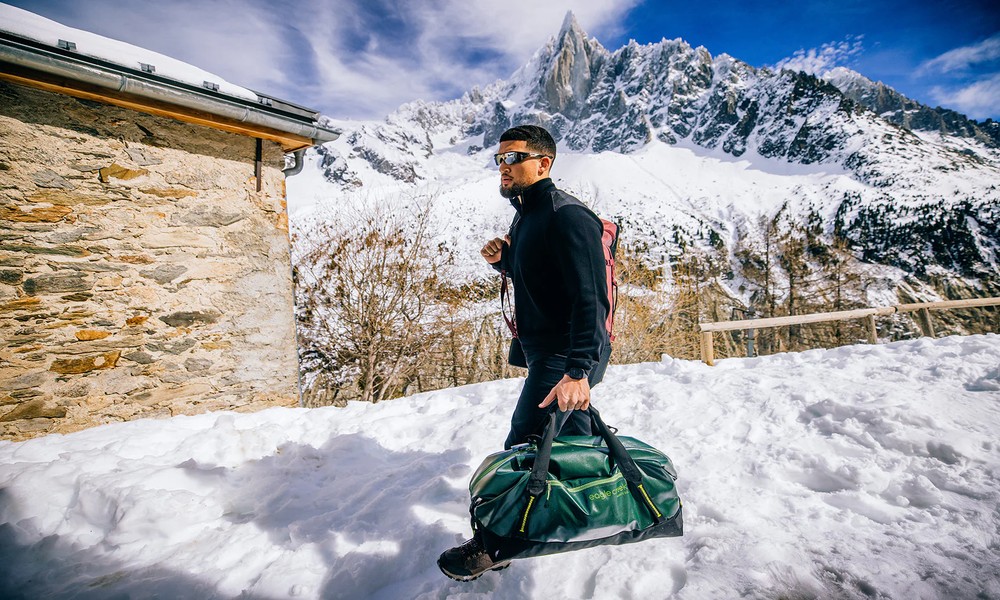

Cold-weather travel can intimidate even experienced packers. The instinct is usually to throw in everything warm you own and hope for the best. The result is a suitcase that won’t close and a back that aches by the time you reach the gate. Worse, much of what you packed never gets worn during the trip.
Layering done well is the secret to staying warm without overpacking. Five well-chosen pieces will keep you comfortable from freezing mornings to mild afternoons. They take up less suitcase space than two heavy jackets and let you adjust on the fly as conditions change throughout the day.
Why Layering Beats Bulk
A single thick coat traps heat well in cold conditions but offers no flexibility. The moment you step into a heated bus or start hiking up a trail, you overheat. Once you sweat into a heavy garment, it stays damp for hours and chills you the moment you cool down.
Multiple thin layers work together to manage moisture and temperature independently. A base layer wicks sweat off your skin. A mid-layer traps body heat. An outer shell blocks wind and rain. When the weather changes, you adjust one piece rather than swapping out your entire outfit.
The system also saves significant space. A merino base layer plus a fleece pullover plus a packable shell weighs less and packs smaller than a single down parka, while providing more total warmth and far more versatility across conditions.
Start With a Quality Base Layer
The base layer sits closest to your skin and does the most important job. It moves moisture away from your body so you stay dry. Merino wool is the standard for serious cold-weather travelers. It wicks moisture well. It regulates temperature across a wide range. And it resists odor through multiple wearings, which matters when laundry isn’t an option on the road.
Synthetic base layers like polyester or polypropylene work well too and tend to cost less than merino. They dry faster but can develop odor more quickly. Avoid cotton entirely for cold-weather base layers. Once cotton gets damp, it stays damp and pulls heat away from your body.
Pack two base layer tops and two base layer bottoms for a week-long trip. Rotate them through the days and they will get you through comfortably.
A Note for Cruise Travelers
Travelers booking an Alaskan cruise face a particular packing challenge. Mornings on deck can be near freezing even in summer. Shore excursions might involve hiking on a glacier or kayaking past icebergs. By afternoon, the same day might warm up enough to leave the parka behind. The ship’s dining room expects something nicer entirely.
A layered approach handles all of these scenarios with the same core pieces. The base layer works under a sweater for breakfast in a heated dining room. Add a mid-layer and shell for a morning shore excursion. Strip back down to the base and sweater for an afternoon naturalist talk. The same suitcase travels through a remarkable range of conditions without needing a second checked bag.
Build a Smart Mid-Layer
The mid-layer is where warmth happens. Fleece and lightweight down each work well in their own way. Synthetic puffies are a great third option when wet weather is likely. Fleece breathes better and dries faster but offers less warmth per ounce. Down compresses smaller and warms more efficiently but loses insulating ability when wet. Synthetic insulation splits the difference and keeps working even after a soaking.
For most cold-weather travel, a packable down or synthetic puffy plus a lightweight fleece pullover gives you tremendous range. The fleece works alone on milder days. The puffy adds significant warmth when temperatures drop. Worn together, they handle truly cold conditions.
Look for mid-layers with a half-zip or full-zip front. The ability to open the neck even an inch makes a big difference in temperature regulation while you’re moving.
Choose an Outer Shell That Earns Its Spot
The outer layer blocks wind and rain rather than providing warmth on its own. A waterproof breathable shell is the most versatile choice. Look for one with fully sealed seams and an adjustable hood that fits over a beanie. Pit zips also help you vent quickly when you start to warm up on the move.
A shell roughly the weight of a heavy raincoat handles most cold-weather conditions when paired with proper layers underneath. Avoid bulky insulated parkas unless you’re going somewhere with persistent extreme cold. They take up enormous suitcase space and tend to overheat the moment you start moving.
Accessories That Earn Their Keep
A good wool or synthetic beanie weighs almost nothing and dramatically affects how warm you feel. Bring two so you have a backup if one gets wet. A neck gaiter or buff serves multiple purposes. It warms your neck. It pulls up over your face when the wind picks up. It doubles as a hat or headband in a pinch.
Gloves deserve more thought than most travelers give them. A pair of liner gloves that fit under a heavier insulated glove gives you flexibility. The liners alone work on milder days. Adding the outer glove handles cold conditions. Wearing both layers protects fingers in the coldest weather.
Footwear for Cold Adventures
Boots matter enormously in cold-weather travel. Look for insulated waterproof boots with aggressive tread for slippery surfaces. A boot rated to twenty degrees handles most cold-weather conditions if paired with the right socks.
Speaking of socks, this is where many travelers fail. Cotton socks have no place in cold-weather travel. Merino wool socks of medium thickness work for most conditions. Bring a heavier pair for the coldest days and a lighter pair for milder ones. Rotate them daily and let yesterday’s pair dry out fully.
Pack With Intent
Lay everything out before it goes in the bag. Make sure every piece works with at least two other pieces in your kit. Single-use items are usually a mistake. A cocktail dress you’ll wear once still earns its space if it works for two evenings. A heavy parka you might wear once usually doesn’t.
A packing cube system helps too. Roll base layers tightly. Stuff a down jacket into its own pocket if it has one. Compress everything before final placement. A well-packed cold-weather suitcase is often surprisingly small.
The Real Test
The best-packed cold-weather suitcase passes a simple test. Every piece comes out of the suitcase at least three times during the trip. Every piece works in at least two outfits. Nothing has to be hauled around all day just to be used once. When your packing holds up to those standards, you can travel light through almost any climate without sacrificing comfort.











Leave a Comment